


 Log in or Sign up
Map
 FavoritesLog in or Sign up
 Help
HelpEmbroidery File Formats Guide - Digitizing Buddy

Removed from Unnamed collection

29 July 2026
Source: Images may be subject to copyright. Learn More
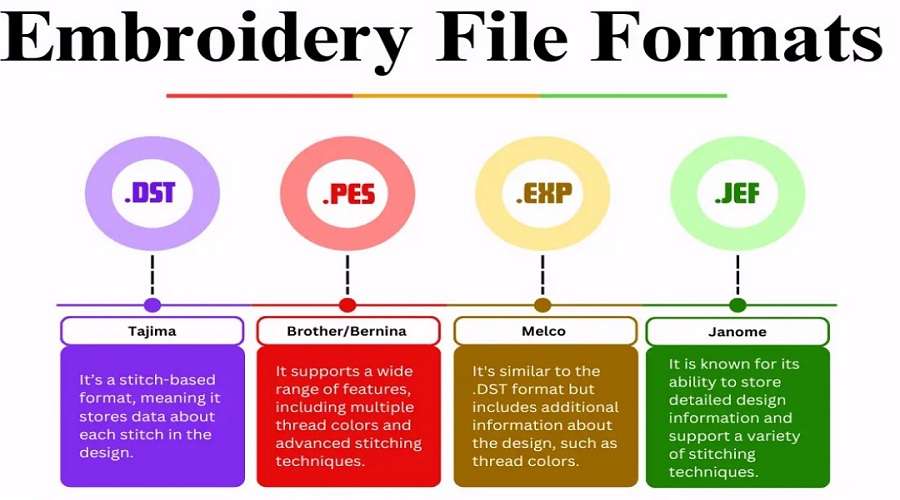
Choosing the correct embroidery file format is essential for achieving smooth stitching and reliable machine performance. Different embroidery machines support different file types, and using the wrong format can lead to stitching errors, thread breaks, or design distortion. If you are looking for an embroidery file formats guide, understanding the differences between formats such as DST, PES, JEF, EXP, VP3, and SEW can help you select the right file for your machine. Each format stores stitch information differently and is designed for compatibility with specific embroidery brands and software. Learning which file type works best for your equipment can improve embroidery quality, reduce production issues, and save valuable time. Whether you are creating custom apparel, business logos, hats, patches, or promotional products, using the proper embroidery file format ensures accurate and consistent results. A good understanding of embroidery file formats helps both beginners and professionals achieve cleaner, more efficient, and high-quality embroidery on every project.
 Explorer 1851786
 United States Save it
 Comments
 Flights